
Integrated Resort Operators vs Casino-First Gaming Executives in 2027
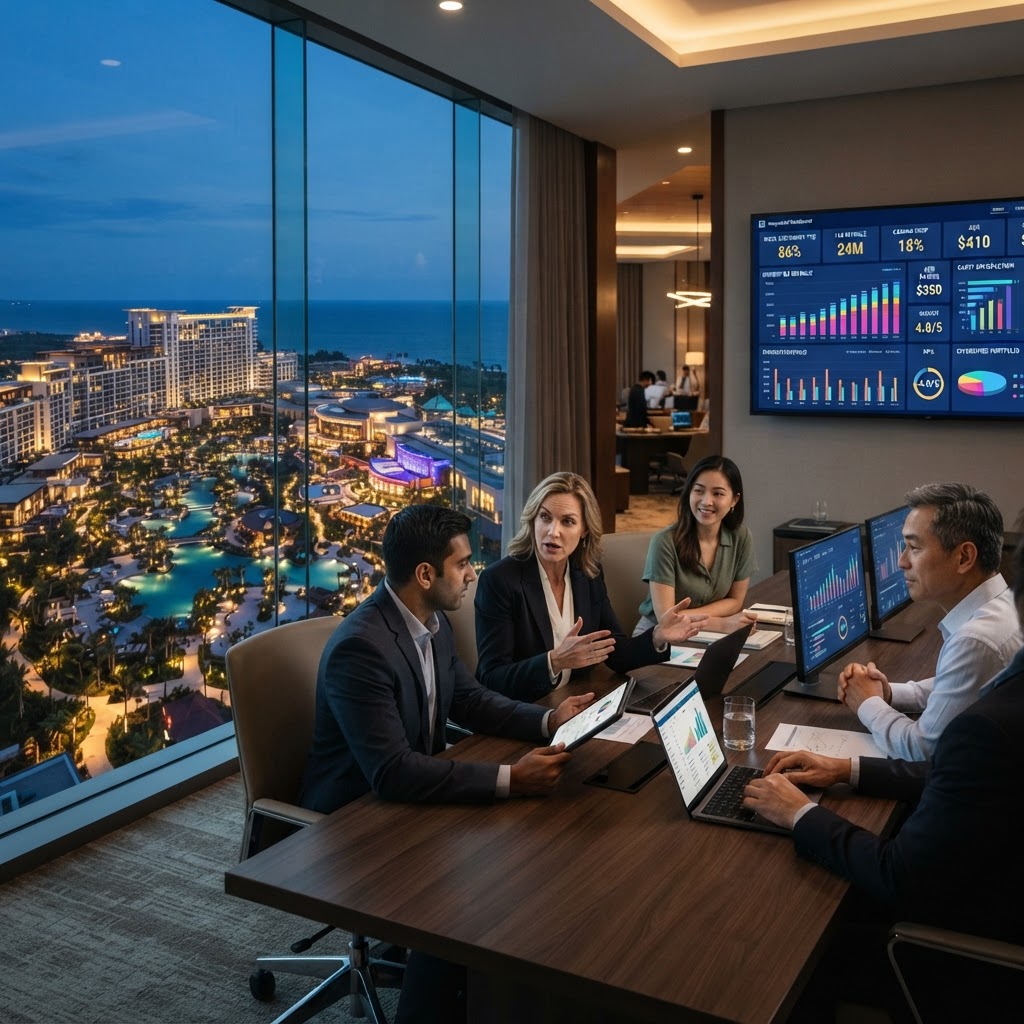
Marina Bay Sands now earns more per square foot from retail and MICE space than gaming floors, forcing a leadership shift. This head-to-head comparison breaks down what separates casino-first executives from integrated resort operators heading into 2027.
The Decline of the Gaming-Only Revenue Model
In 2012, Marina Bay Sands generated roughly 70 percent of its revenue from gaming. By 2023, that figure had dropped below 50 percent, and non-gaming revenue per available square foot in its retail and MICE (meetings, incentives, conferences, exhibitions) spaces had climbed faster than gaming floor yield for six consecutive years. Las Vegas Sands reported that its Singapore property's convention and retail footprint now outperforms many standalone shopping centers in Southeast Asia on a per-square-foot basis. This is not a Singapore anomaly. MGM Resorts, Wynn Macau and Genting Malaysia have all restructured capital spending toward entertainment venues, culinary partnerships and branded retail rather than expanding gaming floors.
The math is simple. A high-limit baccarat table generates predictable but capped revenue tied to visitation and credit lines. A well-curated retail corridor or a flexible MICE hall captures spend from guests who never touch a gaming table, including corporate groups, families and leisure travelers who increasingly avoid gaming-first branding altogether. Regulatory pressure in multiple jurisdictions, from Macau's 2022 concession renewal terms to tightening anti-money-laundering rules across Asia, has also pushed operators to diversify revenue away from pure gaming exposure.
For professionals who built careers inside casino operations, this shift changes what leadership competence looks like. The skill set that built a career on the gaming floor in 2015 is not the skill set that gets someone promoted to general manager in 2027.
Comparing Skill Sets: Gaming Ops vs Hospitality Generalists
Casino-first executives typically rise through table games management, surveillance, or marketing tied to player tracking systems. Their expertise centers on compliance, credit risk and player retention economics. Hospitality generalists, by contrast, build careers across food and beverage, rooms division, event management and increasingly, retail leasing and entertainment programming.
| Criteria | Casino-First Gaming Executive | Integrated Resort Operator |
|---|---|---|
| Primary KPI | Table drop, win percentage, hold | RevPAR, revenue per available square foot, total guest spend |
| Core training | Gaming compliance, surveillance, credit operations | Hospitality yield management, F&B margin, event sales |
| Capital priority | Floor expansion, slot density | Retail leasing, entertainment venues, MICE flexibility |
| Guest data focus | Player rating and comp systems | Cross-property spend tracking across all touchpoints |
| Regulatory exposure | Gaming license compliance | Gaming compliance plus hospitality, labor and ADA standards |
| Career ceiling without diversification | Casino GM | Resort President, Chief Operating Officer |
| Typical base salary (US market, 2026 estimates) | $140,000 to $190,000 | $160,000 to $230,000 |
The compensation gap is widening because boards are rewarding executives who can speak fluently about both gaming hold percentages and retail sales-per-square-foot benchmarks. A director of casino operations who cannot read a MICE sales pipeline is increasingly seen as a department head rather than a future president.
Allocating Capital: Retail and Entertainment Over Floor Expansion
Between 2020 and 2024, Marina Bay Sands invested over 1 billion dollars in its Sands Expansion Project, with the majority allocated to a new arena, additional luxury retail and expanded convention space rather than new gaming tables. Wynn Las Vegas followed a similar pattern, investing heavily in its Wynn Plaza retail concourse and private dining concepts rather than slot floor square footage.
This capital reallocation reflects a simple yield comparison. Retail space in a well-trafficked resort corridor can generate 1,200 to 2,000 dollars per square foot annually in markets like Singapore and Las Vegas, while incremental gaming floor expansion often returns diminishing marginal yield once a property exceeds its natural catchment demand. MICE space, when booked efficiently, drives multi-night stays, F&B attachment and repeat corporate business that gaming floors cannot replicate.
For gaming executives considering a leadership transition, understanding capital allocation logic is now a baseline expectation, not a specialty skill. Boards expect candidates to defend square-footage decisions with the same fluency they once reserved for hold percentage targets.
Strategic Leadership Frameworks Taught in USHMU Resort Programs
The United States Hospitality and Management University built its Master of Science in Resort Management around this exact transition. Students work through case studies modeled on real integrated resort capital decisions, including gaming floor versus retail yield comparisons similar to the Marina Bay Sands example above. The program pairs gaming compliance coursework with hospitality yield strategy, so graduates can move between a gaming commission hearing and a retail leasing negotiation without losing operational credibility in either room.
This dual fluency matters because integrated resort boards increasingly recruit general managers who can present a single, unified revenue strategy rather than separate gaming and non-gaming narratives. USHMU's curriculum structure reflects that expectation directly, with courses that require students to model full-property revenue scenarios rather than siloed departmental budgets.
Data-Driven Decisions for Cross-Departmental Revenue Capture
Modern resort leadership depends on unified guest data systems that track spend across gaming, rooms, F&B, retail and entertainment under a single guest profile. Properties that still operate gaming loyalty systems separately from hotel and retail CRM platforms are losing the ability to identify high-value guests who spend heavily outside the casino floor.
A practical framework for cross-departmental revenue capture includes:
- Unify guest identification across all property systems, including retail point-of-sale and entertainment ticketing, not just gaming player cards
- Set revenue-per-available-square-foot targets for every leasable space, not only gaming floors
- Track MICE booking lead time against F&B and retail attachment rates to forecast total event value
- Reward department heads on total guest lifetime spend rather than siloed departmental revenue
- Audit capital requests against comparable per-square-foot yield data before approving floor reconfiguration
Operators who implement this kind of integrated dashboard typically identify 8 to 15 percent of previously invisible non-gaming revenue within the first reporting cycle, according to internal benchmarking data shared across major Asian and US integrated resort operators in recent industry forums.
Building a Career Path in Modern Integrated Resort Management
Mid-career gaming professionals have a realistic path into integrated resort leadership, but it requires deliberate skill acquisition rather than waiting for internal promotion cycles. A typical progression looks like this:
- Casino operations manager or pit boss builds compliance and player management expertise
- Lateral move into hotel operations or event sales to build hospitality yield fluency
- Cross-departmental revenue analyst role, often newly created at diversified properties
- Director of resort operations, overseeing gaming, rooms and retail jointly
- General manager or regional vice president of integrated resort operations
Graduate coursework, such as USHMU's Master of Science in Resort Management, compresses steps two and three for professionals who cannot wait for an internal lateral opening. The degree signals to hiring boards that a candidate can already model cross-departmental revenue rather than needing years of on-the-job exposure to learn it.
Verdict by Reader Profile
For gaming compliance specialists planning to stay in regulatory roles: Casino-first expertise remains valuable and well compensated, but ceiling growth is limited to department head roles unless hospitality fluency is added.
For mid-career professionals targeting a general manager or COO track by 2028: The integrated resort operator path is the only realistic route. Boards are actively filtering out candidates who cannot speak to retail and MICE yield alongside gaming performance.
For professionals currently in hotel or F&B leadership considering a move into gaming-adjacent resorts: This is a strong window of opportunity, since integrated properties need hospitality generalists more than they need additional gaming specialists right now.
Conclusion
The data from Marina Bay Sands and comparable integrated resorts makes the direction clear. Gaming-only leadership models are shrinking in both revenue share and career ceiling, while integrated hospitality strategy is becoming the standard for executive advancement. Professionals who build cross-departmental fluency now, through structured education, lateral moves or targeted graduate programs like USHMU's Master of Science in Resort Management, will be positioned for the general manager and regional leadership roles opening across US, Asian and Gulf region integrated resorts through 2027.
If you are evaluating your next career move, start by auditing your own resume against the skill set comparison table above, and consider which gaps are closing fastest for the roles you want.
FAQ
What is an integrated resort operator? An integrated resort operator is a senior executive who manages revenue strategy across gaming, hotel, retail, dining and MICE operations as a single unified business rather than treating gaming as the primary profit center.
Is gaming revenue declining at major properties? Gaming revenue share is declining as a percentage of total property revenue at properties like Marina Bay Sands, even as absolute gaming revenue remains stable, because non-gaming revenue streams are growing faster.
Can a casino operations manager transition into resort leadership without going back to school? It is possible through lateral moves into hotel or event operations, but structured graduate programs significantly shorten the timeline by building hospitality yield fluency alongside existing gaming expertise.
What salary range should mid-career gaming professionals expect when moving into integrated resort leadership? Base salaries for integrated resort operator roles in the US market typically range from 160,000 to 230,000 dollars depending on property size and market, compared to 140,000 to 190,000 dollars for casino-specific general manager roles.
How does USHMU prepare students for this leadership shift? The USHMU Master of Science in Resort Management combines gaming compliance training with hospitality yield management coursework, allowing graduates to model full-property revenue strategy rather than siloed departmental performance.
Explore USHMU Programs
Discover degrees and certifications across hospitality, business, and applied AI.
Browse Academic Catalog