
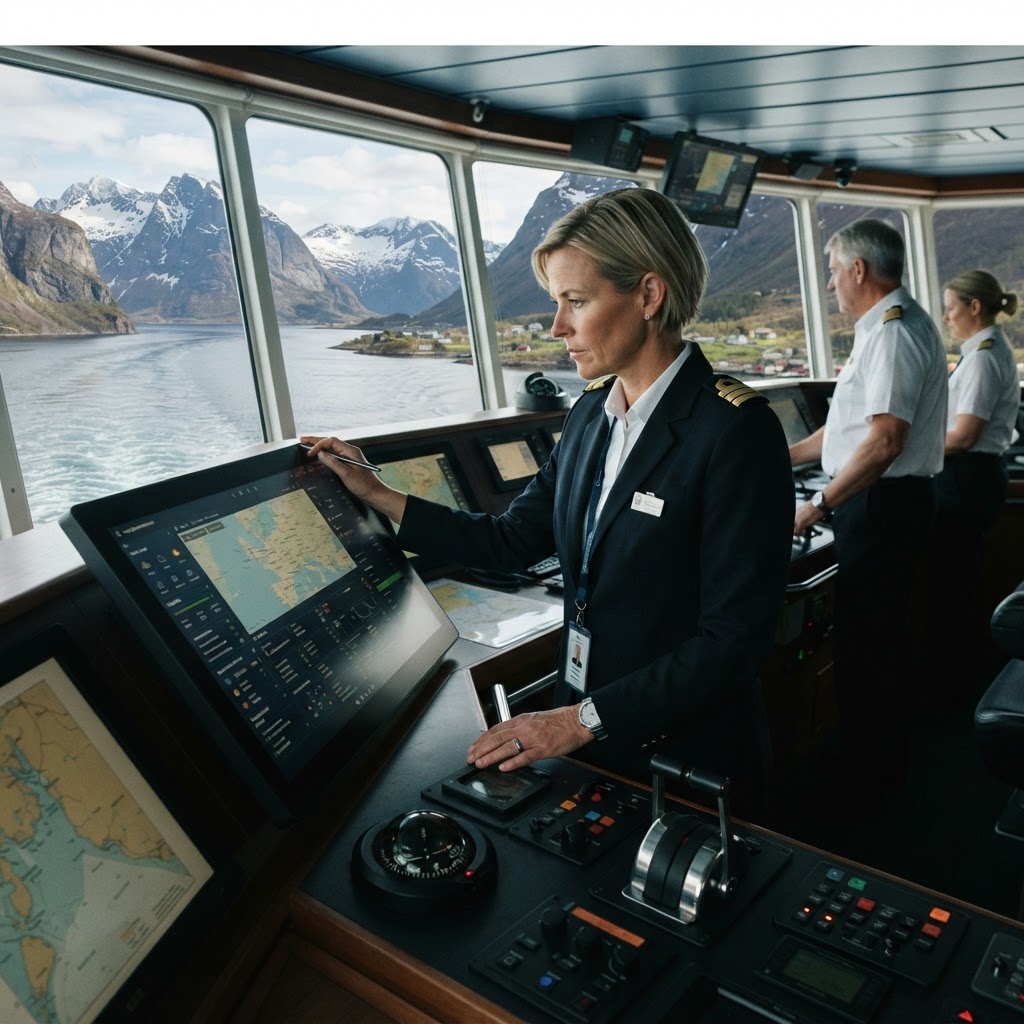
Inside Cruise Line Logistics for 2027 Experiential Shore Excursion Revenue
A case study of how luxury expedition cruise lines are acquiring Arctic transit and activity assets to replace third-party excursion vendors, reclaiming margin and quality control ahead of 2027.
A Zodiac Breakdown in Svalbard Changed One Line's Strategy
In August 2023, a mid-sized expedition cruise operator running a 14-day Svalbard circuit lost nearly $180,000 in a single sailing. The cause was not a mechanical failure on the ship. It was a third-party shore excursion contractor in Longyearbyen that could not supply enough certified Zodiac drivers for a 220-passenger landing day. Forty guests sat idle for ninety minutes while the vendor scrambled. Refunds, onboard credits, and a social media backlash followed.
That single incident, recounted by operations staff who later moved into vertically integrated roles, became a turning point case study circulated across the expedition cruise sector. By 2025, the line in question had acquired a controlling stake in a Norwegian polar transit company. By 2026, three more expedition operators had followed with similar acquisitions across Greenland, Antarctica, and the Canadian Arctic. The pattern is now a defining operational shift heading into 2027: cruise lines are buying the local transport and activity companies that used to be vendors, not partners.
This article examines why that shift is happening, what it costs to execute, and what it means for operations managers and students entering cruise industry management over the next two years.
The Shift Toward Vertical Integration in Expedition Travel
Expedition and luxury cruise lines built their shore excursion model on a simple premise: local operators know the terrain, hold the permits, and carry the insurance, so the cruise line should not have to. That premise worked when expedition cruising was a niche product with modest passenger volumes.
It stopped working as expedition capacity tripled between 2015 and 2024, according to industry capacity data tracked by Cruise Industry News. Remote ports in Svalbard, Antarctica, and the Kimberley region of Australia do not have unlimited certified guides, vehicles, or vessels. When three or four ships compete for the same limited pool of local Zodiac drivers, snowmobile fleets, or helicopter operators in a single season, service consistency collapses.
The response among premium operators has been direct ownership. Lindblad Expeditions, Hurtigruten, and several privately held ultra-luxury lines have each pursued minority or majority stakes in local transit and activity companies in the Arctic and sub-Antarctic over the past three years. The logic mirrors vertical integration strategies seen in other high-margin travel segments: when you own the asset, you control the schedule, the staffing standard, and the price.
Analyzing Profit Leaks in Third-Party Shore Excursion Partnerships
Third-party shore excursion arrangements typically operate on a revenue share, with the cruise line taking 20 to 30 percent of ticket price and the local operator retaining the rest, plus full control over labor costs, equipment maintenance, and scheduling. On paper this looks low-risk for the cruise line. In practice it creates three recurring profit leaks.
First, capacity mismatches. Local operators size their fleets for average demand, not peak cruise season demand, so cruise lines pay premium rush rates or accept reduced landing capacity.
First, capacity mismatches. Local operators size their fleets for average demand, not peak cruise season demand, so cruise lines pay premium rush rates or accept reduced landing capacity.
Second, quality variance. A vendor serving four different cruise lines in one season has no incentive to meet any single line's guest experience standard. Guide scripting, safety briefings, and even uniform presentation vary trip to trip.
Third, margin compression at renewal. As expedition demand has grown, local operators in constrained markets like Longyearbyen and Ushuaia have gained pricing leverage, pushing revenue share terms against the cruise line by three to five percentage points at each contract renewal since 2022.
Operations finance teams at several lines now model third-party excursion dependency as a recurring EBITDA drag of 4 to 7 percent on expedition itinerary profitability, based on internal benchmarking shared at the 2025 Seatrade Cruise Global conference.
Proprietary Logistics: Managing Local Transport and Activity Assets
Owning the supply chain means owning operational headaches that used to belong to someone else. The lines that have moved fastest on acquisition have typically targeted three asset categories.
Transit Fleets
Zodiac boats, snowcats, and small expedition vessels used for landings and ship-to-shore transfers. Owning these assets lets a cruise line standardize maintenance schedules and guarantee fleet availability regardless of competitor ship traffic in the same port.
Local Guiding Workforces
Certified polar guides, naturalists, and safety officers. Several operators have moved from contract guiding staff to direct employment contracts with seasonal housing and year-round training retainers, reducing turnover from the 35 to 40 percent range common among contract guides to under 15 percent among directly employed staff.
Ground Activity Operators
Husky sledding outfits, small aircraft charter services, and remote lodge partners. Full acquisition is rare here due to regulatory and land-use restrictions, so lines more commonly negotiate exclusivity agreements or multi-year equity partnerships instead of outright purchase.
The acquisition math matters. A typical Arctic transit company acquisition has run between $2 million and $6 million for a fleet of 15 to 20 Zodiacs plus associated land infrastructure, based on disclosed transaction values in the Norwegian and Canadian markets between 2023 and 2025. Operators recovering that cost within two to three operating seasons, through margin capture previously paid to vendors, consider the acquisition successful.
Technology Integration for Real-Time Experiential Quality Control
Ownership alone does not guarantee consistency. The second layer of the strategy is real-time monitoring technology that previously only applied to onboard hotel operations now extended to shore excursions.
Lines with proprietary excursion assets are deploying GPS-tagged Zodiac fleets, guide-worn tablets for live headcount and incident logging, and centralized dispatch software that mirrors airline ground operations systems. This allows the expedition operations manager on the bridge to see, in real time, which landing groups are running behind schedule, which Zodiac is near capacity, and which guide needs backup.
Guest satisfaction scoring has also moved from end-of-cruise surveys to in-the-moment digital pulse checks delivered through cabin tablets or mobile apps immediately after a landing excursion. This data feeds directly into guide performance reviews and fleet deployment decisions for the following day, something not possible under third-party vendor arrangements where data sharing was limited or nonexistent.
Staffing Requirements for Specialized Cruise Expedition Teams
Vertical integration has created new career tracks that did not exist in cruise operations five years ago. Positions now recruited directly by cruise lines, rather than sourced through vendors, include:
- Expedition Logistics Manager: oversees fleet scheduling and local asset maintenance, typical salary band $70,000 to $95,000 depending on region and season length
- Shore Operations Supervisor: manages guide teams and daily landing execution, typical salary band $55,000 to $75,000
- Polar Guide (direct employment): $45,000 to $65,000 seasonal equivalent with housing and training stipend
- Fleet Maintenance Lead: $50,000 to $70,000, responsible for Zodiac and vehicle upkeep across a season
These roles require a different hiring profile than traditional shore excursion coordinators. Candidates need operational logistics training, not just guest service experience, along with familiarity with permitting, remote region labor law, and asset management systems.
Projecting 2027 Revenue Gains Through Direct Excursion Ownership
Industry modeling presented at the 2025 Seatrade Cruise Global conference projected that expedition lines completing vertical integration of their core Arctic and Antarctic shore logistics by 2027 could see shore excursion segment margins rise from the historical 20 to 30 percent range to 45 to 55 percent, driven by eliminated vendor revenue share and reduced capacity-related refunds.
That gain is not guaranteed. It depends on acquisition discipline, local labor relations, and technology adoption speed. Lines that acquire assets without building the staffing and monitoring systems described above risk simply inheriting vendor-level inconsistency under a new ownership structure.
Quick Reference: Vendor Model vs Proprietary Model
| Factor | Third-Party Vendor Model | Proprietary Ownership Model |
|---|---|---|
| Revenue share to cruise line | 20 to 30 percent | 45 to 55 percent projected by 2027 |
| Guide turnover | 35 to 40 percent seasonal | Under 15 percent |
| Capacity control | Shared with competing lines | Exclusive to owning operator |
| Data visibility | Limited or none | Real-time GPS and guest pulse data |
| Upfront capital need | Low | $2 million to $6 million per regional asset base |
A Practical Checklist for Operations Managers Evaluating Vertical Integration
- Audit current vendor revenue share and refund history over the past three seasons
- Identify remote ports where competing ships draw on the same limited local labor pool
- Model acquisition payback period against projected margin capture
- Build direct employment and training pipelines before transitioning off vendor contracts
- Deploy real-time fleet and guide monitoring technology concurrently with asset acquisition, not after
Conclusion and Next Steps
The cruise lines pulling ahead in the expedition and luxury segment heading into 2027 are the ones treating shore excursions as core infrastructure rather than outsourced convenience. The Arctic transit acquisitions underway today are not isolated deals. They represent a broader repositioning of experiential logistics as a controllable, ownable, and monetizable part of the cruise value chain.
Operations managers evaluating this shift should start by quantifying their own vendor profit leaks and mapping which regional markets show the clearest case for direct asset ownership. Students and professionals aiming to lead these efforts will need both logistics and hospitality fluency, a combination increasingly taught through dedicated coursework rather than learned purely on the job.
This is why the United States Hospitality and Management University includes a dedicated elective on Global Supply Chain and Luxury Logistics within its Master of International Hospitality Management, giving students direct exposure to the asset ownership and vendor management decisions shaping the 2027 cruise market.
Frequently Asked Questions
Why are luxury cruise lines buying local transit companies instead of continuing vendor contracts? Vendor contracts in constrained markets like Svalbard and Antarctica create capacity mismatches, inconsistent guest experiences, and shrinking margins as local operators gain pricing leverage. Ownership lets cruise lines control fleet availability, staffing standards, and pricing directly.
How much does it cost to acquire a regional expedition transit fleet? Disclosed transaction values for Arctic transit company acquisitions between 2023 and 2025 have ranged from $2 million to $6 million for fleets of 15 to 20 Zodiacs plus supporting infrastructure, with payback typically expected within two to three operating seasons.
What new roles are created by vertical integration in cruise expedition operations? Key roles include Expedition Logistics Manager, Shore Operations Supervisor, directly employed Polar Guides, and Fleet Maintenance Leads, each requiring logistics and asset management skills beyond traditional guest service training.
Will this trend extend beyond Arctic and Antarctic expedition cruising? Industry modeling suggests similar vertical integration pressure is building in other high-demand, logistically constrained markets such as the Kimberley coast in Australia and parts of the Galapagos, where local capacity limits and premium guest expectations mirror polar conditions.
How does proprietary ownership affect guest satisfaction scoring? Real-time monitoring tools, including GPS-tagged fleets and immediate post-excursion guest feedback, allow operators to adjust staffing and scheduling within the same day, a level of responsiveness not possible under third-party vendor arrangements.
Explore USHMU Programs
Discover degrees and certifications across hospitality, business, and applied AI.
Browse Academic Catalog